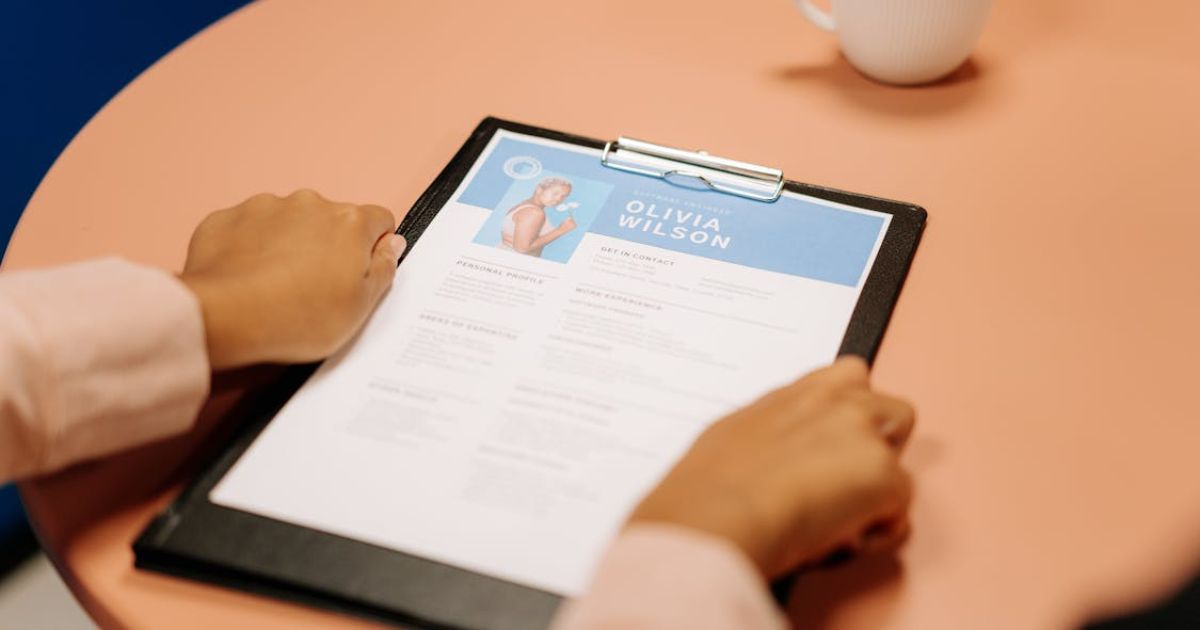
Landing your first job in the Philippines as a fresh graduate feels like an impossible puzzle. You scroll through job postings requiring “2-3 years experience,” and your heart sinks. How can you get experience without getting hired first?
Here’s the truth: Your resume is your golden ticket, but most fresh graduates make critical mistakes that send their applications straight to the rejection pile. The good news? You’re about to learn exactly how to craft a resume that makes hiring managers sit up and take notice—even without professional work experience.
Before you type a single word, you need to know what local HR managers look for in fresh graduate resumes.
Philippine companies receive hundreds of applications for entry-level positions. Your resume has approximately 6-10 seconds to make an impression. That’s it.
Employers want to see:
Your lack of experience isn’t automatically a dealbreaker. Your poorly written resume is.
Start with the basics, but make them count:
Don’t include: Age, civil status, religion, or photo (unless specifically requested, which is still common in PH job postings).
This is where 90% of fresh graduates fail. They write generic statements like “To obtain a challenging position where I can utilize my skills.”
That tells employers nothing.
Instead, write a targeted 2-3 sentence statement that includes:
Example for an IT position:
“Recent BS Computer Science graduate from University of Santo Tomas with hands-on experience in Python, Java, and web development through academic projects and internships. Passionate about creating user-friendly applications and eager to contribute to innovative software solutions at [Company Name].”
Example for a marketing role:
“Marketing Management graduate from De La Salle University with demonstrated skills in social media strategy, content creation, and market research. Successfully managed university event campaigns reaching 5,000+ students. Seeking to apply digital marketing skills to help [Company Name] expand its online presence.”
For fresh graduates, education is your strongest asset. List it prominently:
Format:
Example:
Bachelor of Science in Accountancy
Polytechnic University of the Philippines, Manila
Graduated: March 2024
Cum Laude
Relevant Coursework: Financial Accounting, Auditing, Taxation, Cost Accounting, Business Law
This section can make or break your application. Philippine employers use Applicant Tracking Systems (ATS) that scan for keywords from the job posting.
Divide your skills into categories:
Technical Skills:
Soft Skills:
Pro tip: Match skills directly from the job posting. If they want “proficiency in MS Excel,” use those exact words, not “good with spreadsheets.”
Yes, you have experience—you just need to frame it correctly.
Include:
Format each entry:
Position Title
Company Name, Location
Duration (Month Year – Month Year)
Example:
Marketing Intern
XYZ Digital Agency, Makati City
June 2023 – August 2023
Example for OJT:
Human Resources Trainee
ABC Corporation, Quezon City
January 2024 – March 2024
Philippine employers value active students. This section shows initiative and soft skills.
Include:
Example:
Vice President for Finance
Junior Philippine Accountants Society, PUP Chapter
July 2022 – June 2023
This section is your secret weapon as a fresh graduate. Academic projects demonstrate applied skills.
Example for Engineering:
Capstone Project: Solar-Powered Water Filtration System
September 2023 – February 2024
Example for Business:
Thesis: Consumer Behavior Analysis of Gen Z in E-Commerce
August 2023 – March 2024
List relevant certifications that boost your credibility:
Format:
Fresh graduates should never exceed one page. Hiring managers won’t read beyond that.
If you’re struggling with space:
Safe choices:
Design rules:
Many Philippine companies still expect:
However, progressive companies follow international standards without photos and personal details.
Solution: Research the company culture. When in doubt, prepare two versions.
That fancy Canva template? HR has seen it 50 times this week.
Use clean, professional formats that focus on content, not graphics.
Wrong: “Responsible for social media posting”
Right: “Created 30+ social media posts resulting in 40% follower growth”
Your high school achievements, elementary awards, and personal hobbies (unless job-related) don’t belong on your resume.
One spelling mistake can eliminate you from consideration. Proofread multiple times and ask someone else to review.
Generic resumes get generic results—rejection.
Customize your objective, skills, and highlighted experiences for each application.
Here’s a proven structure that works:
[YOUR NAME]
[Phone] | [Email] | [LinkedIn] | [Location]

CAREER OBJECTIVE
[2-3 sentences tailored to the position]

EDUCATION
[Degree, University, Graduation Date]
[Honors, relevant coursework, GPA if impressive]

SKILLS
Technical Skills: [6-8 relevant skills]
Soft Skills: [4-5 relevant skills]

WORK EXPERIENCE / INTERNSHIP EXPERIENCE
[Position, Company, Duration]
• [Achievement with numbers]
• [Achievement with numbers]
• [Achievement with numbers]

ORGANIZATIONS & LEADERSHIP
[Position, Organization, Duration]
• [Key accomplishment]
• [Key accomplishment]

PROJECTS
[Project Title, Duration]
• [What you did and results]

CERTIFICATIONS
[Relevant certifications and dates]Most Philippine companies now use ATS software to filter applications before human eyes see them.
To pass ATS screening:
Example: Instead of just “CPA,” write “Certified Public Accountant (CPA)”
You now have the blueprint. Here’s how to implement it:
Today:
This week:
Before each application:
Focus on academic projects, thesis work, organizational involvement, and volunteer experiences. Frame classroom projects as real work by highlighting skills used and results achieved. Even group projects can demonstrate teamwork, project management, and technical abilities.
Include your GWA if it’s 1.75 or better (or 3.5/4.0 and above). If you graduated with honors, definitely include it. If your GWA is average, focus on highlighting other strengths like projects, skills, and extracurricular achievements instead.
Create multiple versions of your resume, each tailored to specific industries. Change your career objective, reorder your skills to prioritize relevant ones, and highlight different projects or experiences that align with each field. Never use a one-size-fits-all approach.
Yes, but choose wisely. Avoid overly designed templates with graphics, colors, and unusual layouts that ATS systems can’t read. Stick to clean, simple templates from reputable sources like Google Docs, Microsoft Word, or professional platforms like Canva’s ATS-friendly templates.
Update your resume every time you complete a significant project, earn a certification, or gain new skills—even before you start job hunting. Keep a “master resume” document where you add everything, then create customized versions for each application.
Writing a resume as a fresh graduate in the Philippines isn’t about having years of experience. It’s about strategically presenting the experiences you do have in a way that shows your potential value to employers.
Your classmates are sending generic, templated resumes. You’re now equipped to create something that actually gets read and remembered.
The Philippine job market is competitive, but prepared candidates stand out. You’ve just become one of them.
Ready to land that interview? Start crafting your resume today using this framework. Tailor it to your target position, proofread it twice, and send it with confidence. Your first career opportunity is waiting—and now you know exactly how to get there.